Learn · Concentrates
THCa live rosin
The cleanest, most aromatic way to experience high-THCa hemp. No solvents. No shortcuts. Just fresh-frozen flower, ice water, and the right amount of pressure. Here is how it is made, what to look for, and why it sits at the top of the concentrate shelf.
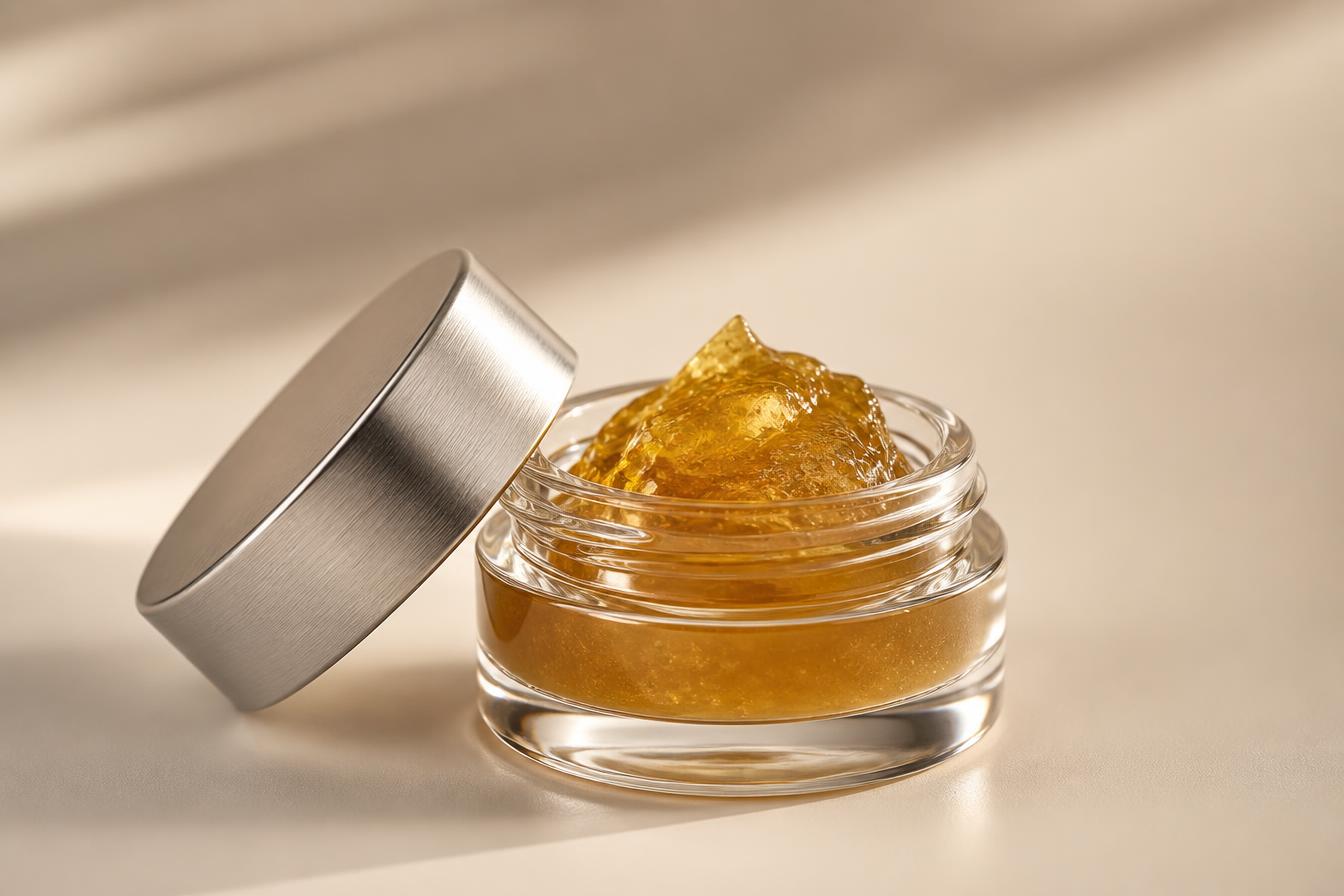
What THCa live rosin actually is
Live rosin is a hemp concentrate prized for purity. It starts with cannabis that is frozen right after harvest — hence "live" — to lock in terpenes. Trichomes are separated from the plant using ice water and agitation, then filtered through fine mesh screens. That hash is dried and pressed between heated plates. The heat and pressure squeeze out a sap-like oil that cools into rosin.
Because the process never introduces butane, propane, ethanol, or CO₂, the final product is considered solventless. What you taste is closer to the living plant: bright, complex, and strain-specific. What you see on the COA is typically high THCa, low delta-9 THC, and a terpene profile that can rival top-shelf flower.
From plant to jar: the extraction process
- 1. Fresh freeze. Whole plants or buds are frozen immediately after harvest, preserving volatile terpenes that degrade during traditional curing.
- 2. Ice-water wash. Frozen material is gently agitated in ice-cold water to knock trichome heads loose. The cold temperature keeps waxes and chlorophyll from dissolving.
- 3. Screen collection. Trichomes are filtered through a series of micron bags. The best hash — often 73–120 micron — is collected and freeze-dried.
- 4. Press. Dried hash is placed between parchment paper and pressed at 160–220°F. The lower the temperature, the lighter the color and the more terpenes survive.
- 5. Cure and package. Rosin is collected, lightly cured for texture, and sealed in glass to protect it from oxygen and light.
How it compares to other concentrates
| Type | Starting material | Extraction | Character |
|---|---|---|---|
| Live rosin | Fresh-frozen | Ice water + heat/pressure | Solventless, full terpene profile |
| Live resin | Fresh-frozen | Butane / propane extraction | High terpenes, solvent purged |
| Distillate | Dried/cured or trim | Short-path distillation | High potency, little flavor |
| Badder / budder | Dried/cured | Whipped under heat | Creamy texture, mid terpenes |
| Shatter | Dried/cured | Hydrocarbon wash | Glassy, stable, less terp-rich |
Reading quality: color, texture, and terpenes
Premium live rosin ranges from pale blonde to deep amber. Lighter colors usually mean lower temperatures during pressing and fewer plant contaminants. A wet, glossy surface signals high terpene content. Over time, rosin can budder or sugar as terpenes separate from cannabinoids — this is normal and often desirable.
The COA is your quality backstop. Look for THCa percentages typically between 70% and 90%, total terpenes above 5%, and a full safety panel covering residual solvents, pesticides, heavy metals, and microbials. On GLAZZYNG, every rosin listing links to its batch-specific lab report.
Why solventless matters
Solventless extraction removes the risk of residual hydrocarbons. It also tends to preserve a wider range of native compounds — not just THCa and terpenes, but minor cannabinoids and flavonoids that contribute to the entourage effect. For consumers who want the cleanest expression of the plant, rosin is the benchmark.
How to consume and store it
Dabbing is the most common method. Use a clean quartz banger, heat to 450–520°F, and take a small dab. Lower temperatures preserve flavor; higher temperatures produce bigger vapor and stronger effects. You can also vaporize rosin in a concentrate-compatible device or add a tiny amount to flower.
Storage matters. Keep rosin in an airtight glass jar in a cool, dark place. Refrigeration extends freshness but can introduce condensation if the jar is opened cold. Always let it come to room temperature sealed before opening.
FAQ
What is THCa live rosin?
THCa live rosin is a solventless cannabis concentrate made from fresh-frozen hemp flower. The plant is washed into ice-water hash, then pressed with heat and pressure to squeeze out a terpene-rich oil that hardens into rosin. No butane, propane or ethanol is used.
Is THCa rosin the same as THC rosin?
Almost. Raw rosin is high in THCa, the acidic precursor. When you dab or vape it, the heat converts THCa into delta-9 THC. So the concentrate tests high in THCa on the lab report but feels like a THC concentrate once consumed.
What makes live rosin 'live'?
'Live' means the plant was flash-frozen immediately after harvest instead of being dried and cured. Freezing preserves volatile terpenes that would otherwise evaporate during curing, giving live rosin a brighter aroma and fuller flavor.
How is live rosin different from live resin?
Live rosin is solventless — only ice water, heat and pressure. Live resin uses hydrocarbon solvents like butane or propane to strip cannabinoids and terpenes. Both are made from fresh-frozen material, but rosin is prized for being chemical-free.
Why is live rosin more expensive?
It takes more raw material and labor. Fresh-frozen inputs, hand-washed hash, lower yields, and careful temperature control all add cost. The result is a cleaner, more aromatic concentrate that connoisseurs pay a premium for.
How do you consume THCa live rosin?
Most people dab it at 450–520°F to preserve terpenes. You can also add a rice-grain sized amount to a flower bowl, use a vaporizer designed for concentrates, or twax a joint. Start small — rosin is potent.
Shop solventless on GLAZZYNG.
Browse lab-tested THCa live rosin, live resin, hash and concentrates from vetted, farm-direct brands — with the COA one tap away.
Browse concentrates